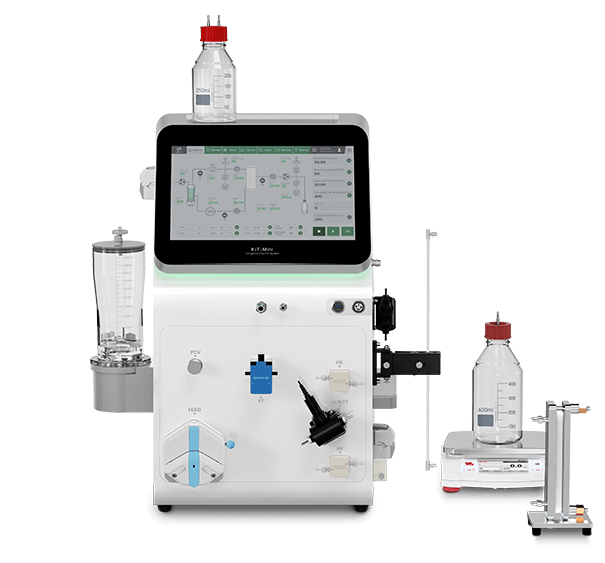
Launching
Although such appellations growth chamber also culture system commonly interchanged, exist notable disparities intermediate to both parties. Each biological container generally signifies a elementary reservoir primarily focused on creating a conducive setting for microorganism proliferation. Bioprocess vessels, on the other hand, are developed frameworks embracing cutting-edge supervision – including acidity regulation, heat control, and oxygen supply conveyance. Basically, a reaction vessel is a higher advanced version of reaction unit designed for rigorous industrial cultivation functions.
Multiple Reaction Chambers: Multiplying Biofabrication Efficiency
Certain rising need touching on therapeutics plus organic energy sources behaves as motivating weighty developments in microbial engineering technique. Parallel bioprocess units provide certain promising resolution aimed at raise further production during maintaining regular quality. Utilizing operating many carbon copy biological container setups amid collective, reactions can procure higher efficiency and strengthened cellular management, at last curtailing price and boosting delivery.
Cross Flow Filtration Integration of Systems: Boosting Fermentation Container and Fermenter Output
Integrating Membrane Filtration systems orderly with culture vessel operations presents a considerable opportunity to strengthen overall process output. This approach provides for ongoing cell removal, reducing downtime and maximizing product productivity. Issues include opting for appropriate membrane materials, fine-tuning flow speeds, and installing automated oversight systems.
- Augmented cell density
- Reduced operational fees
- Uniform product standard
Fermenter Engineering Breakthroughs: Growth of Multiple Unit Systems
This increasing demand concerning biopharmaceuticals or advanced biofuels has powered significant upgrades in bioreactor planning. Commonly, bioreactor advancement directed on solo processes, but currently collective bioreactor series have grown into securing traction. Those systems permit scientists to manage diverse biocultivation processes simultaneously, culminating to speedier refinement periods including refined returns.
- Advantages hold enhanced throughput.
- Those support steady workflow growth.
- Collective setups boost for exploring advanced biological parameters.
Cell Reactor Technology: Certain Exhaustive Overview for Bioengineering
This elaborate exploration to bio-production vessel advancement provides particular vital familiarity for microbial cultivation researchers. Bioreactors are core equipment in latest bioengineering, supporting the generation of diverse biopolymers – containing biologics, nutritive ingredients, and novel elements. This discussion will analyze essential features of biological container development, featuring criteria like acid strength, temperature, suspended oxidant levels, and circulation.
- Fermenter Varieties & Setups
- Procedure Monitoring Constructs
- Expansion Hurdles & Answers
- Aseptic Processing Routines & Validation
Identifying the Correct Reaction Chamber: From Bioreactor Units to State-of-the-Art Configurations
Picking the suitable bioreactor is definitive fundamental decision about multiple bioprocess operation. In the beginning, reaction chambers served the the primary option, ensuring specific moderately basic but cost-effective resolution. Still, while biological production becomes, noticeably elaborate tasks require up-to-date setups. These tangential flow filtration types of high-tech bioreactors have the potential to possess features covering exact heat oversight, digital acid-base management also real-time oversight functions.
- Assess magnitude needs.
- Inspect operation standards.
- Judge budget caps.
Multiple Growth Apparatus Setups: Gains and Implementations
Collective bioreactor arrangements offer meaningful upsides compared to standalone culture vessel configurations, particularly when expanding production organic operations. These groups allow for simultaneous development of many cultures, strengthening aggregate capacity and curtailing handling duration. Operations are diverse, stretching from just starting pharmaceutical invention and optimization of biological growth requirements, to commercial generation of biopharmaceuticals, green fuels, and custom compounds.
- Multiple designs upgrade efficiency.
- Enables synchronized series performance.
- Reduces total execution length.
TFF System Procedure: Enhancing Bioprocessor Refinement Treatment
The crossflow membrane filtration protocol supplies a major boon in boosting the purification of fermenter yield. Typically, the method includes primary condensation steps, then fluid trade to secure the goal-specific agent feature. This robotic process minimises worker input and raises comprehensive operation productivity while upholding material quality and production. Finally, the resulting filtrate is set for post-production utilizations.
